
Temperament Requirements in Working Dog Standards
You can breed a German Shepherd that looks exactly like the dogs that founded the breed but lacks every mental characteristic that made the breed valuable. Structure is visible. Temperament is not. This invisibility has allowed temperament to erode in show populations while physical breed type remains superficially preserved.
Working dog standards must address temperament with the same specificity they apply to structure. The mental characteristics that define working breeds—drive, nerve strength, trainability, environmental stability—are as heritable as physical traits and as essential to breed identity. Standards that ignore temperament aren't really breed standards. They're appearance standards.
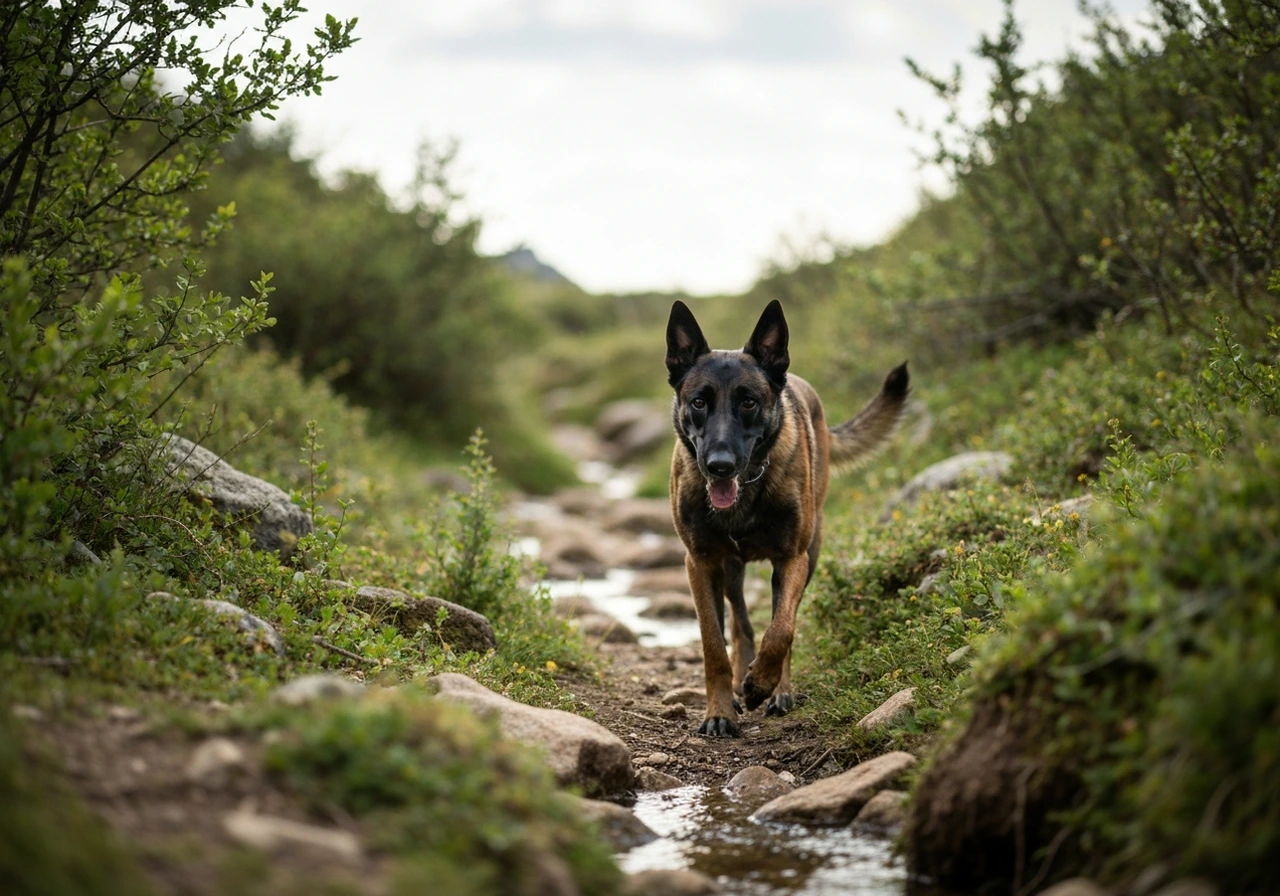
The Components of Working Temperament
Working temperament isn't a single trait but a complex of interrelated characteristics. Understanding these components clarifies what standards should address and what working tests should evaluate.
Drive refers to the intensity and persistence of motivated behavior. A dog with high prey drive pursues moving objects intensely. A dog with high defense drive responds strongly to perceived threats. A dog with high pack drive seeks handler engagement. Working dogs need appropriate drives for their specific work.
Nerve strength describes the dog's capacity to function under stress. A dog with strong nerves maintains behavior when startled, pressured, or confronted with novel situations. Weak nerves manifest as shutdown, avoidance, or inappropriate aggression. Working situations generate stress. Dogs without nerve strength cannot perform.
Trainability combines biddability with problem-solving capacity. A trainable dog wants to work with a handler and can learn complex behaviors. Pure biddability without intelligence produces dogs that comply but cannot think. Intelligence without biddability produces dogs that solve problems but ignore handlers. Working dogs need both.
Environmental stability enables function in varied settings. A stable dog performs consistently regardless of location, distractions, or conditions. Unstable dogs that work well at home but fall apart in new environments have limited utility. Working requires performing under conditions the dog hasn't specifically trained for.
"Structure is the engine. Temperament is the driver. A beautiful engine with no driver goes nowhere. That's what we've created in many show lines—mechanically correct dogs with nothing inside driving them to work."
How Show Selection Alters Temperament
Show ring success requires specific behavioral characteristics that often conflict with working temperament. Selection for show success therefore selects against working temperament, even when breeders don't intend this outcome.
The show ring rewards calm tolerance of handling. Judges physically examine dogs. Dogs must stand still while strangers run hands over their bodies. High-drive dogs with strong defensive responses find this difficult. Lower-drive, less reactive dogs find it easy. Show selection favors the latter.
The show ring punishes environmental reactivity. Dogs must gait in patterns regardless of distractions. Crowds, noises, other dogs—nothing should disrupt the performance. Working dogs are supposed to notice their environments. They're supposed to react to changes. This alertness becomes a liability in the ring.
The show ring rewards stylized movement over natural function. The handler dictates pace and pattern. Dogs that want to move faster, slower, or differently than handlers prefer don't show well. Independent thinking—valuable in working contexts—creates presentation problems in shows.
Over generations, these selection pressures reshape temperament. Show populations become calmer, less reactive, more tolerant of handling, and less independently minded. These changes make dogs easier to show and easier to live with. They also make dogs less capable of working.
Breed-Specific Temperament Requirements
Different working applications require different temperament profiles. Breed standards should specify the temperament appropriate to each breed's original function.
Herding breeds need prey drive channeled into controlled movement of livestock. They need environmental awareness to track stock across varied terrain. They need biddability to respond to handler direction and independence to make decisions when handlers cannot direct them. The balance between responsiveness and initiative defines herding temperament.
Protection breeds need defense drive sufficient to engage threats and nerve strength to sustain engagement under pressure. They need clear-headed assessment to distinguish actual threats from non-threats. They need trainability for control and social stability for safe integration into daily life. Protection temperament balances power with reliability.
Hunting breeds need prey drive appropriate to their hunting style—high for pursuit breeds, more moderate for pointing breeds that must control the flush. They need environmental hardiness to work in harsh conditions. They need cooperation to work with handlers and other dogs. Hunting temperament combines drive with handler partnership.
Detection breeds need environmental curiosity and persistence. They must search thoroughly even when rewards aren't immediate. They need focus to continue working despite distractions. They need handler engagement to communicate discoveries. Detection temperament emphasizes methodology and communication.
Current Standard Language on Temperament
Most breed standards include temperament descriptions, but the language tends toward vague generality rather than specific requirement. This vagueness enables temperament erosion because nothing concrete is specified or enforced.
The AKC German Shepherd standard describes temperament as "direct and fearless, but not hostile." This sounds specific but provides minimal guidance. What level of directness? Fearless in what contexts? Where is the line between fearlessness and hostility? Different judges interpret this language differently, and dogs with very different temperaments can satisfy it.
The FCI German Shepherd standard is somewhat more specific, describing "steady nerves, self-assurance, absolute impartiality and good nature." It also specifies the dog should be "easily trained" and "ever vigilant." This language provides more direction but still lacks the specificity needed for consistent enforcement.
Compare these descriptions to the detailed structural specifications in the same standards. Standards specify precise angles, proportions, and measurements for physical structure. Temperament gets paragraphs of adjectives without metrics, thresholds, or testing requirements.
Temperament Testing Systems
Several systems exist for evaluating working dog temperament. These systems provide frameworks that breed standards could incorporate.
The German breed survey (Korung) evaluates temperament alongside structure for breeding certification. Dogs must demonstrate appropriate reactions to gunfire, pressure from a decoy, and separated situations. The evaluation occurs under standardized conditions with trained observers. Dogs failing temperament evaluation cannot breed regardless of structural quality.
Schutzhund/IPO trials evaluate tracking, obedience, and protection behaviors. While structured as competition, these trials reveal temperament through performance under pressure. Dogs must demonstrate drive, nerve strength, and handler engagement across multiple phases. Weak temperament dogs cannot succeed at serious levels.
The American Temperament Test Society provides standardized evaluations for any breed. Tests assess reaction to neutral, friendly, and threatening strangers; response to visual, auditory, and tactile stimuli; and stability across varied situations. The tests provide comparative data across breeds and populations.
Volhard puppy testing evaluates temperament characteristics in young puppies. Tests assess social attraction, following, restraint response, social dominance, elevation, retrieving, touch sensitivity, sound sensitivity, sight sensitivity, and stability. Results help match puppies to appropriate homes and identify working prospects.
What Standards Should Require
Effective temperament requirements in breed standards would include several components currently missing from most standards.
Standards should specify temperament requirements appropriate to breed function. A herding breed standard should require demonstrated herding instinct. A protection breed standard should require demonstrated protection responses. Vague descriptions of "good temperament" should give way to functional requirements.
Standards should mandate temperament testing for breeding eligibility. Dogs earning breeding certificates or championships should pass temperament evaluations. This requirement would redirect selection toward working temperament by making it matter for breeding decisions.
Standards should define disqualifying temperament faults with specificity. Extreme shyness, unprovoked aggression, and nervous instability should disqualify dogs from showing and breeding. Current standards often mention these faults but rarely define or enforce them.
Standards should require breeding pairs to complement rather than amplify temperament extremes. Breeding two nervous dogs should be prohibited regardless of their individual qualities. Standard language should address breeding decisions, not just individual dog evaluation.
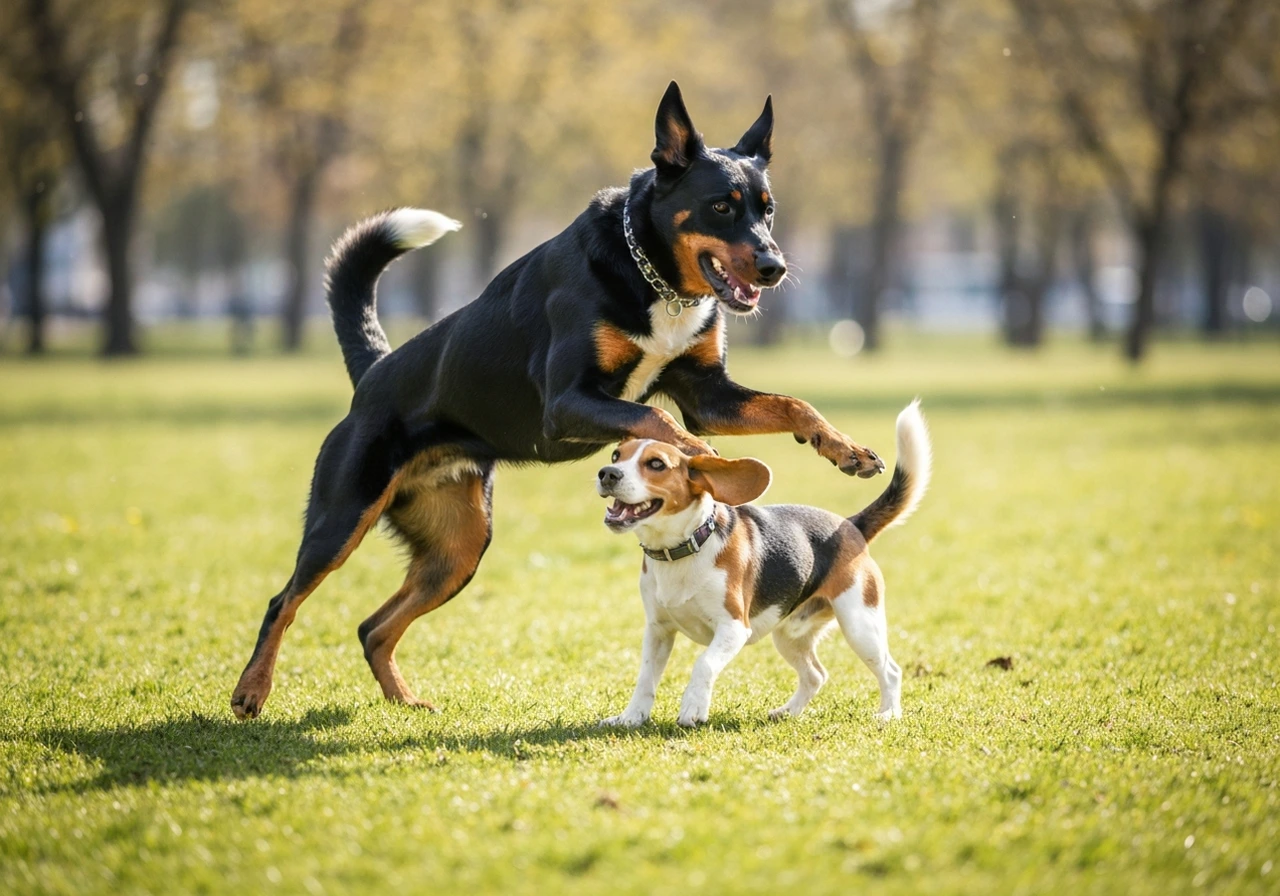
The Heritability of Temperament
Temperament characteristics are substantially heritable, though environmental factors also influence development. Research across multiple breeds demonstrates consistent genetic contribution to behavioral traits.
Studies of military working dog populations show strong heritability for detection drive, social aggression, and handler engagement. Offspring resemble parents in these traits at rates indicating significant genetic control. Selection based on these traits produces populations with higher average working ability.
Twin and sibling studies in dogs demonstrate genetic contribution to fear responses, environmental reactivity, and trainability. Dogs from the same litters raised in different environments still show behavioral similarities. The shared genetics influence temperament despite different life experiences.
Breed differences in temperament further demonstrate heritability. Pointers point. Retrievers retrieve. Herding breeds herd. These behavioral predispositions appear without specific training, indicating genetic programming. The same genetic mechanisms can produce temperament differences within breeds across show and working populations.
"Every experienced breeder knows temperament is heritable. We select for it constantly. The question isn't whether temperament can be bred—it's whether our selection criteria move temperament toward or away from breed function. In show populations, the movement has been away."
Environmental Development of Temperament
While temperament has genetic foundations, environmental factors during development significantly influence expression. Standards should therefore address both breeding and rearing practices.
Early socialization during critical periods shapes adult behavior. Puppies exposed to varied stimuli between three and twelve weeks develop broader environmental stability than poorly socialized puppies. The genetic potential for stability requires appropriate environmental triggers to develop.
Training methods influence temperament expression. Dogs trained with balanced methods that include appropriate pressure develop confidence that purely positive methods may not produce. Working temperament often requires the capacity to work through mild stress. Dogs never exposed to stress cannot develop this capacity.
Living conditions affect temperament maintenance. Dogs kept in kennels without stimulation may become environmentally reactive. Dogs never exposed to the conditions they'll work in cannot develop context-appropriate responses. Working dogs need working-relevant life experiences.
Breed standards cannot directly control how puppies are raised. But standards could require documentation of socialization protocols, mandate early temperament testing, and specify minimum developmental experiences for breeding certification eligibility.
The Show Breeder Perspective
Show breeders often dispute the claim that their dogs have compromised temperament. Understanding their perspective helps explain resistance to temperament requirements in standards.
Show breeders correctly note that their dogs typically have stable, friendly temperaments suitable for family life. The dogs tolerate handling, live peacefully with other pets, and rarely display dangerous aggression. By these criteria, show temperament is good temperament. This pattern is evident across breeds, from German Shepherds to herding breeds where the divide has become especially pronounced.
The disagreement centers on whether working capacity should define "good temperament." Show breeders prioritize livability. Working breeders prioritize function. A dog that is easy to live with but cannot work has good temperament by one definition and poor temperament by another.
Show breeders also argue that most puppies go to pet homes rather than working homes. Breeding for intense working temperament produces dogs that overwhelm typical pet owners. Softer temperament serves the market better, even if it compromises working utility.
This market argument has practical force but ignores the question of breed preservation. If German Shepherds lose the temperament that made them German Shepherds, the breed exists in name only. Serving the pet market by eliminating working capacity transforms breeds into something fundamentally different.
Preserving Working Temperament
Working communities preserve temperament by selecting for working performance. This approach maintains temperament more effectively than any standard language because function enforces requirements automatically. As explored in our analysis of breed preservation through working programs, this selection pressure is the most reliable mechanism for maintaining breed character.
Dogs that cannot work don't breed in working programs. A Belgian Malinois without protection drive won't be bred by serious protection dog breeders regardless of how the dog looks. A Border Collie without herding instinct won't be bred by serious herding breeders. Selection for working success maintains working temperament.
Working communities also maintain cultural knowledge about temperament that show communities often lack. Experienced working breeders can identify temperament characteristics in young puppies that predict adult working capacity. This knowledge passes through mentorship rather than written standards.
The challenge is maintaining working populations large enough to sustain genetic diversity while also maintaining selection intensity. Small populations face inbreeding pressures that can override other selection criteria. Expanding working populations requires expanding the working community itself.
Recommendations for Breed Standards
Improved temperament specifications in breed standards should include several elements.
First, standards should define temperament requirements in functional terms appropriate to breed heritage. Rather than vague descriptions of "good temperament," standards should specify the drives, stability, and trainability necessary for breed-typical work.
Second, standards should mandate temperament testing for championship titles and breeding eligibility. These tests should evaluate breed-relevant behaviors under standardized conditions. Dogs failing temperament tests should be ineligible regardless of structural quality.
Third, standards should establish disqualifying temperament faults with clear definitions. Shyness, nervous aggression, and instability should have specific behavioral definitions rather than leaving interpretation to individual judges.
Fourth, standards should require working titles or working test completion for breeding certification. Dogs should demonstrate some level of working capacity before contributing to the gene pool. This requirement would maintain selection pressure for working temperament.
These reforms would face resistance from show breeding communities. But the alternative—continuing to breed working breeds that cannot work—serves neither the breeds nor the public. Standards exist to preserve breeds. Preserving structure while losing temperament isn't preservation. It's taxidermy.
Temperament defines what a dog is more fundamentally than structure defines what a dog looks like. Standards that fail to protect temperament fail to protect breeds. This failure is widespread in current standards and increasingly visible in current dogs. Reform is necessary. The question is whether it will come through proactive change or through the eventual collapse of breeds that have lost what made them valuable.